If you have left a busy café worn out from following the chat, you may have wondered about your hearing. Then a hearing test comes back normal, and the question only gets harder to answer.
The catch is that a quiet test room and a noisy one ask very different things of your ears. For some people, that gap is known as hidden hearing loss. It can make everyday listening hard work even when the results look fine.
This guide explains what hidden hearing loss is and why a standard test can miss it. It also shows how Audience Hearing can help you look further.
What Is Hidden Hearing Loss?
Hidden hearing loss is a term for trouble following speech in noisy places when a standard hearing test looks normal. It isn’t a formal diagnosis for everyone, but researchers use it to describe a pattern that many people report.
So how can your test look normal when listening feels hard? The answer lies in what the test measures. A standard test records the softest sounds you can hear in a quiet room. Then, the results appear on a graph called an audiogram. Everyday listening asks much more, because your ears and brain must pick out one voice from many.
Research from the National Acoustic Laboratories (NAL), an Australian hearing research centre, matches this experience. Its study looked at people with a normal or near-normal audiogram. Many had trouble listening in noisy places, such as restaurants. Many also felt frustrated at being told their hearing was normal.
If you’d like to see how your own results are read, our guide to audiometry test results explains the graph.
Signs You May Have Trouble Hearing Speech in Background Noise
Healthdirect lists trouble hearing in noisy places as a common sign of hearing loss. With this pattern, you might notice that:
- Group conversations leave you tired by the end of the day.
- You ask people to repeat themselves in cafés, pubs or busy meetings.
- You hear people talking but miss some of the words.
- Hearing conversations in noise feels harder for you than for others.
- You follow a one-on-one chat easily in a quiet room, but not in a busy one.
- You avoid social events because listening takes too much effort.
It’s easy to blame a noisy room or a long day. Even so, these signs deserve attention, whatever your last test showed. If you struggle to hear in background noise, you are not imagining it.
What May Lie Behind Hearing Difficulties in Noise?
Researchers haven’t found one single cause, but several things may play a part. In an NAL study, people who reported trouble with speech in noise had higher noise exposure than those who didn’t. The same group also scored lower on a test of sustained attention, which shows how well you keep your focus.
Earwax and middle ear problems can affect hearing too, so a full check helps rule these out.
Cochlear Synaptopathy: One Theory Under Study
One theory is called cochlear synaptopathy. The cochlea is the snail-shaped part of your inner ear. Synapses are the tiny connections that pass sound signals on to your hearing nerve. In cochlear synaptopathy, some of these connections are lost.
Studies, mostly in animals, suggest noise and ageing may cause this without changing your hearing in quiet. That could help explain why a standard test looks normal. However, researchers are still learning how much it matters in people.
Tests That Look Beyond Normal Hearing Test Results
If your normal hearing test results don’t match your daily listening, tell your audiologist how you cope in noise. They can then add extra checks, such as:
- Speech in noise test. You repeat words or sentences while background noise plays. Some clinics call it a hearing in noise test. It shows how well you follow speech when it’s noisy.
- Tympanometry. This measures how well your eardrum moves and helps rule out middle ear problems.
- Listening questionnaires. In the NAL study, questionnaire scores showed the biggest differences between the two groups.
At present, there’s no single agreed test for this pattern, so your audiologist looks at the full picture.
Is There Hidden Hearing Loss Treatment?
The honest answer is that there’s no single proven treatment yet. NAL notes that there are currently no tests or treatments aimed at this problem, and research continues. Your audiologist can still help you listen more comfortably. Options they may discuss include:
- Listening strategies. Pick quieter seats, face the speaker, and choose venues with softer music.
- Hearing protection. Earplugs can protect your ears from loud sounds at concerts or noisy workplaces.
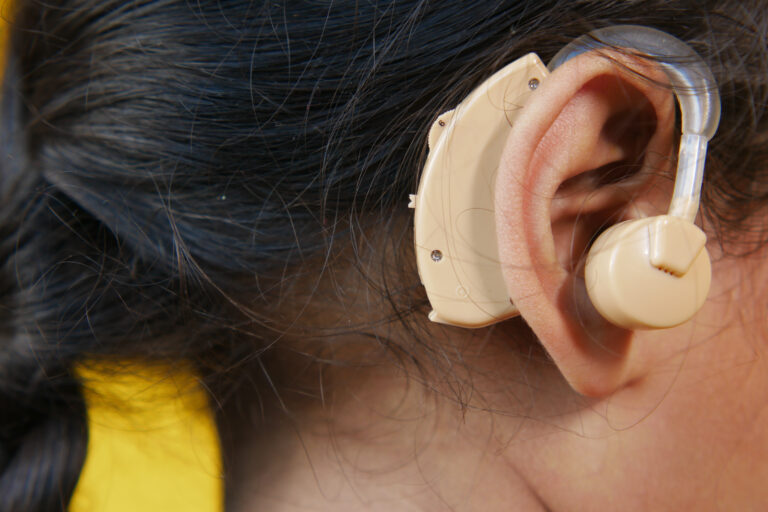
- Hearing technology. Some studies have looked at mild-gain hearing aids for people with normal audiograms who struggle in noise. Some participants reported less difficulty, but results vary and not everyone benefits. Our guide to hearing aids in Australia covers choosing, costs and government funding.
For many people, the issue is hearing clarity in noise, not volume. That’s why turning up the volume may not fix it.
When to Get Help for Hearing Changes
Hearing changes can start slowly or happen suddenly, and the advice differs for each. If you lose hearing suddenly, go to your local emergency department straight away. Healthdirect says sudden hearing loss is an emergency. Seek urgent care too if hearing loss comes with dizziness, ear pain or facial weakness.
For slower changes, see an audiologist for a hearing test if trouble in noise has lasted for weeks. The same goes if it affects work, family or social life. You can also talk to your GP.
Get a Closer Look at How You Hear in Noise
Hidden hearing loss describes trouble following speech in noise when normal hearing test results say otherwise. The causes aren’t fully understood and there’s no single proven treatment yet. A fuller check can show how you cope in noise and what support may suit you.
If you suspect hidden hearing loss, ask us about an advanced hearing test at Audience Hearing. It can include speech-in-noise testing alongside your standard hearing checks.
Book an appointment with us today.
Frequently Asked Questions
Can I have hidden hearing loss if my hearing test is normal?
Yes. The term describes exactly that situation. A standard test shows you can hear soft tones in a quiet room. It doesn’t show how well you follow speech when it’s noisy. If listening feels hard despite a normal result, tell your audiologist so they can look further.
How do audiologists check for trouble hearing in noise?
There’s no single agreed test, so your audiologist looks at several things. These may include a speech in noise test, tympanometry, a listening questionnaire and a talk about your noise history. Together, they show how you cope in everyday listening and what support may suit you.
Can loud noise cause hearing difficulties like this?
Noise may play a part. In an NAL study, people who reported trouble with speech in noise had higher noise exposure than those who didn’t. This doesn’t prove noise is the cause for everyone. However, protecting your ears at concerts and noisy workplaces is still a sensible habit.
Do hearing aids help when test results are normal?
It depends on the person. Some studies have looked at mild-gain hearing aids for people with normal audiograms who struggle in noise. Some participants reported less difficulty. Results may vary since research is still ongoing.
Your audiologist can talk you through whether hearing aids are worth exploring for you.
Should I see my GP or an audiologist first?
For trouble hearing in noise, an audiologist can run a hearing test. You can also talk to your GP, especially if you have ear pain, dizziness or other symptoms. If you lose hearing suddenly, go to your local emergency department straight away.